Spring Is Your Best Marketing Window. Here’s Why Your Trucks Should Be Part of It.
Michigan’s service season opens in about six weeks. Landscaping crews are scheduling their first jobs. HVAC companies are gearing up for cooling season. Plumbers, electricians, contractors — if you run a service business in mid-Michigan, the next eight weeks set the pace for your whole year. And if you’re like most small business owners right now, you’re also deciding where your 2026 marketing budget is going.
There’s a good chance the answer is digital — more Facebook ads, more Google spend, maybe some email. According to Constant Contact’s Q1 2026 Small Business Now report, 68% of small business owners plan to increase their marketing budgets this year despite inflation being their top concern. Social media and email lead the channel list by a wide margin.
That’s not necessarily wrong. But before you commit more budget to channels that are getting more expensive and harder to stand out in, it’s worth running the math on something you already own: your service vehicles.
The digital ad environment in 2026 isn’t getting easier
Social media advertising has real strengths — targeted reach, measurable clicks, quick setup. But the honest reality in 2026 is that those advantages are eroding, and the cost of maintaining them is rising.
Google Ads costs are rising 5–10% annually as more businesses compete for the same local searches. On social platforms, a well-run home service business now needs to spend $2,000–$4,000 per month on paid social just to maintain stable reach. And that bill never stops. The moment you pause the campaign, the impressions disappear.
There’s also the fatigue problem. Ad platforms now concentrate spend aggressively behind “winning” creatives, burning them out faster than ever. Best practice calls for refreshing your ad creative every 7–10 days once campaigns reach meaningful spend — which means a continuous production and management burden most service business owners simply don’t have time for.
None of this means digital advertising doesn’t work. It means that in 2026, it works harder when it’s part of a mix — not when it’s carrying the whole weight.
The CPM math on your own fleet

CPM — cost per thousand impressions — is the standard unit for comparing advertising efficiency across channels. Here’s what the data looks like when you put vehicle wraps in that same frame.
According to research compiled by the Outdoor Advertising Association of America, a professionally wrapped vehicle running normal service routes generates somewhere in the range of 30,000 to 70,000 impressions per day. We’ve written before about why impression estimates deserve scrutiny — the right number for your specific routes depends on where you’re driving and how much traffic you’re moving through. What holds up across methodologies is the CPM comparison: vehicle wraps consistently deliver at $0.48 to $0.77 per thousand impressions. Billboards average $3.56 CPM. Facebook ads run around $7.19 CPM. Newspapers top $19.70 CPM.
A full wrap on a service van costs roughly $2,500–$5,000 installed. That investment, spread across a five-year lifespan, works out to about $1.30 per day — every day, whether the truck is running a job, parked at a job site, or sitting in a driveway off M-127. It doesn’t have an algorithm that changes. It doesn’t need a creative refresh. It doesn’t bill you monthly.
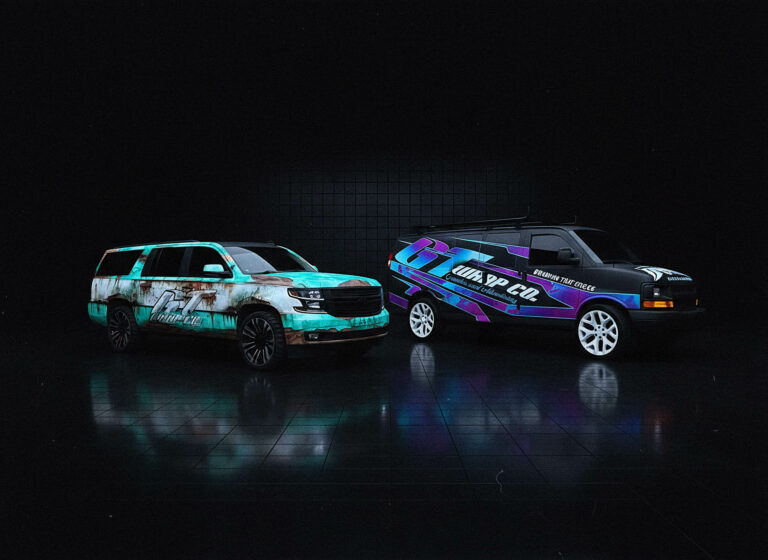
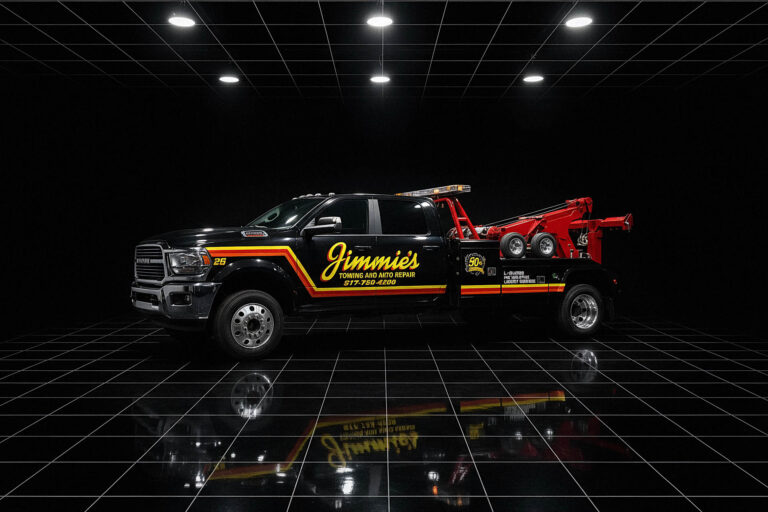
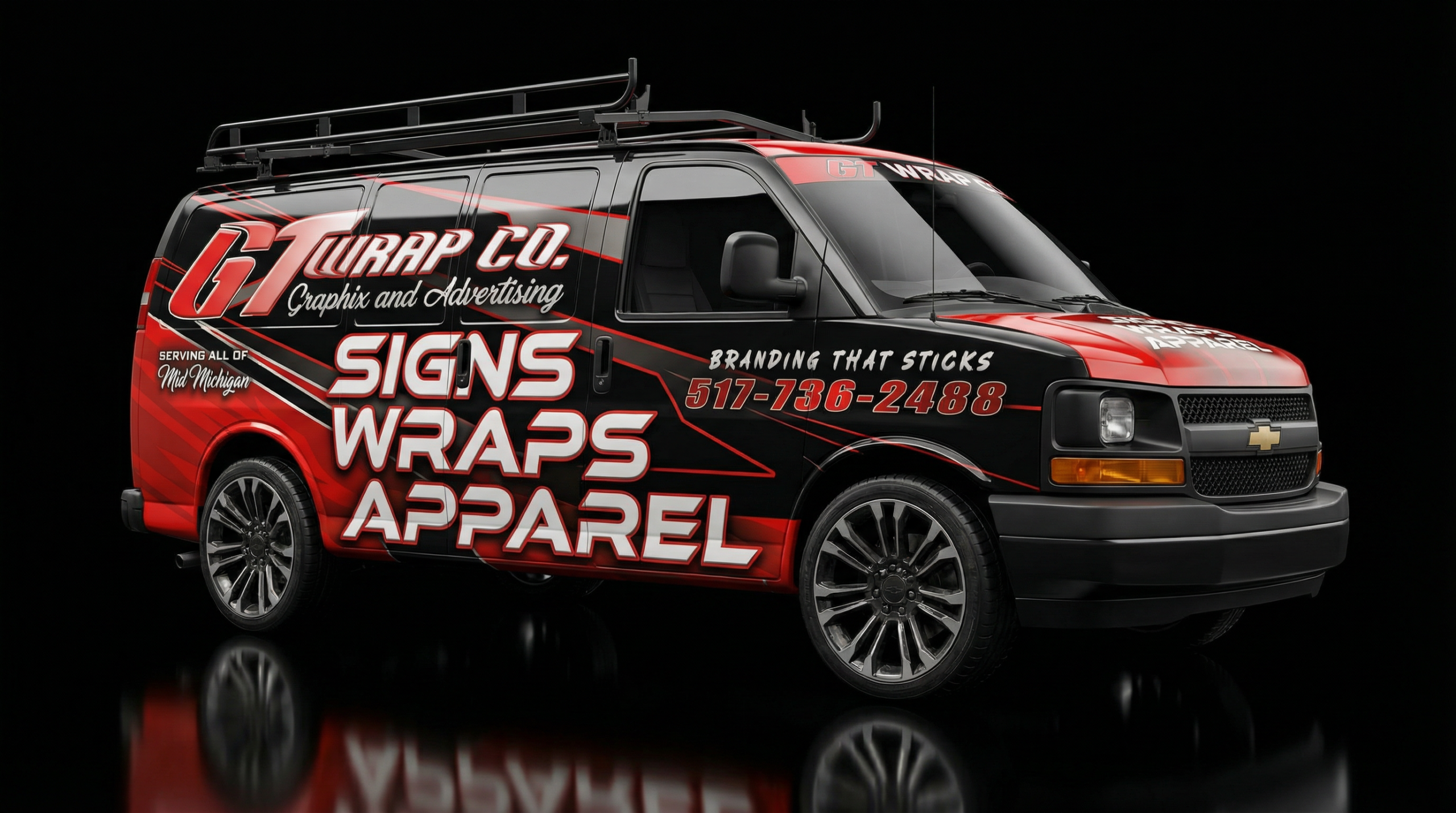
The math gets more interesting when you have multiple vehicles. A three-truck service fleet with consistent branding multiplies your passive impressions across every route, every day of the season. Partial wraps and spot graphics let you get your fleet into the field branded even if a full wrap on every vehicle isn’t in the current budget. Door logos, phone number, service area — the right marks in the right places do real work without the full investment.
Why spring is the window that matters
There are two reasons to think about this now and not in May.
The first is lead time. Design and material prep happen before installation. A vehicle wrap project that starts with a conversation in mid-March can have trucks on the road looking sharp well before the season’s first busy stretch. A call in early May means you might be waiting on scheduling when you most want to be working.
The second is the season itself. Service vehicles driving Michigan roads from April through September accumulate more impressions than at any other time of year — more traffic, more projects, more miles. A wrap installed this spring starts working immediately, through the highest-visibility months of the year.
We see this pattern every year. The business owners who get in front of the spring rush are the ones whose trucks hit the road fully branded and ready. The ones who decide to “deal with it later” are usually dealing with it after the busy season is already half over.
What this actually looks like
You don’t need a full fleet commitment to start. Some of our best commercial wrap projects begin with a single vehicle — clean design, legible at speed, built to last Michigan winters. Once the first one is running, the logic for the rest usually takes care of itself.
Our process is straightforward: send a few photos of your vehicle, tell us what your business does and where you run, and we’ll return a fast, accurate quote. We handle design in-house, so what we build is production-ready — the kind of art that actually reads on the road, not something that looks good on screen and falls apart at 45 miles per hour. And because we’re a 3M Preferred Graphics Installer, the materials we use are rated for this climate — real winters, road salt, freeze-thaw cycles, all of it.
If your vehicles are already driving Michigan roads, your marketing real estate is already paid for. The question is whether it’s working for you.
Take the next step
Spring booking fills up fast. If you’ve been thinking about getting your fleet wrapped before the season starts, now is the time to have the conversation — not because of any artificial urgency, but because the calendar is honest. April and May go quick.
Schedule an appointment or call us at (517) 736‑2488. Send a few photos of your vehicles and we’ll get you a quote — usually fast, always accurate.